
You're staring at a blank weekly planner on Monday morning, coffee going cold beside you. The carnivore diet sounds straightforward until you have to decide which cuts to buy, how much to cook, what your family will eat, and whether your menu is covering more than protein and fat.
That's the operational reality of a carnivore diet meal planner. The food list may be narrow, but a sustainable routine still needs structure. Shopping, batch cooking, leftovers, nutrient coverage, social meals, and household preferences all need a place in the system.
A 2021 peer-reviewed survey of 2,029 adults found that participants had followed the diet for a median of 14 months, with 85% reporting red meat daily or more often and fewer than 10% reporting vegetables, fruits, or grains more than monthly. The pattern is clear: carnivore planning often depends on repetition, a small ingredient base, and deliberate decisions about portions and micronutrients. The full survey is available through the National Library of Medicine.
Why Carnivore Meal Planning Feels Different
Carnivore planning looks simple on paper, then becomes repetitive at the stove and in the grocery aisle. An omnivore meal can change direction with a grain, vegetable, sauce, or legume. Carnivore meals rely on a narrower base, so variety comes from cut, texture, cooking method, and timing. Ground beef, eggs, steak, fish, and dairy may repeat throughout the week, but they do not have to feel identical.
That narrow base makes weak planning habits visible. Buying only lean ground beef can leave meals unsatisfying, while relying on expensive steaks raises both the food bill and cooking workload. A plan that never schedules fish, organs, or other nutrient-dense animal foods also needs a deliberate review for possible gaps.
The survey mentioned earlier reported 93% of participants identifying health as their main motivation and 37% reporting no vitamin supplement use. It also recorded a reported BMI change from 27.2 to 24.3, but these observations describe survey participants and do not show that the diet caused the change. Review the study methods and limitations here.
The work that matters happens outside the recipe
A workable routine settles the operational details before hunger arrives:
- What gets cooked in bulk: Assign preparation windows for ground beef, roasts, burgers, eggs, and braised cuts.
- What fills the gaps: Keep leftovers, tinned fish, hard-boiled eggs, or frozen portions available for rushed meals.
- What the family eats: Use a shared protein as the dinner anchor, then let other household members add their preferred sides.
- What needs tracking: Place organ meats, seafood, dairy, salt, and supplements deliberately instead of hoping they appear by chance.
Practical rule: Keep the ingredient list narrow, but make the workflow flexible.
A repeatable cycle keeps the plan usable. Choose several protein categories, assign them to meal slots, batch-cook foods that hold well, and generate the shopping list from the completed schedule. A digital planner such as Mealdill can automate those repetitive steps, which matters when the same purchases and cooking tasks return every week. The result is fewer daily decisions, clearer nutrient-density checks, and a plan that can accommodate leftovers, family preferences, and imperfect weeks.
Setting Your Goals and Macro Targets
Before choosing recipes, define the version of carnivore you're planning. A strict ruminant-only approach has a very different shopping list from a relaxed version that includes eggs and dairy. A nose-to-tail pattern adds liver, heart, marrow, and other organ meats, which changes both nutrient coverage and meal frequency.
Use this sequence:
- Choose your food boundaries. Decide whether beef and water are your base, or whether eggs, dairy, poultry, seafood, and organ meats fit your approach.
- Set an energy target with a qualified professional if needed. Your target should reflect activity, body-composition goals, appetite, and any medical considerations.
- Set protein before fat. Protein gives the plan its structure. Add fatty cuts, butter, marrow, or tallow according to hunger and energy needs.
- Review the plan after eating it. Persistent hunger, poor training recovery, digestive discomfort, or unwanted weight change means the template needs adjustment.
A useful calculation framework is to estimate protein from lean body mass, then backfill the remaining energy with fat. The often-used range of 0.8 to 1.2 grams of protein per pound of lean body mass and macro ranges such as 30% to 40% protein and 60% to 70% fat appear in the planning brief, but those figures should be treated as starting points rather than universal prescriptions. The provided verified research does not establish them as clinical targets, so individual needs should be reviewed with a registered dietitian or clinician.
Carnivore macro targets by goal
The table below is a planning worksheet, not a set of evidence-based universal numbers. Rather than inventing calorie or macro values, enter targets that match your body, training, appetite, and professional guidance.
| Goal | Daily Calories | Protein (g) | Fat (g) | Carb (g) |
|---|---|---|---|---|
| Fat loss | Set individually | Set individually | Set individually | Based on chosen variant |
| Maintenance | Set individually | Set individually | Set individually | Based on chosen variant |
| Muscle gain | Set individually | Set individually | Set individually | Based on chosen variant |
| High-output training | Set individually | Set individually | Set individually | Review with a sports professional |
Supplements belong in the same conversation as food choices. Electrolytes, vitamin D, omega-3 products, or other supplements may make sense for some people, but the answer depends on seafood intake, dairy tolerance, sun exposure, laboratory results, medications, and the strictness of the diet.
Don't build a beautiful weekly menu before you know whether it will leave you hungry, overloaded with lean protein, or dependent on supplements you haven't evaluated.
Closing the Nutrient Gaps in a Meat-Only Diet
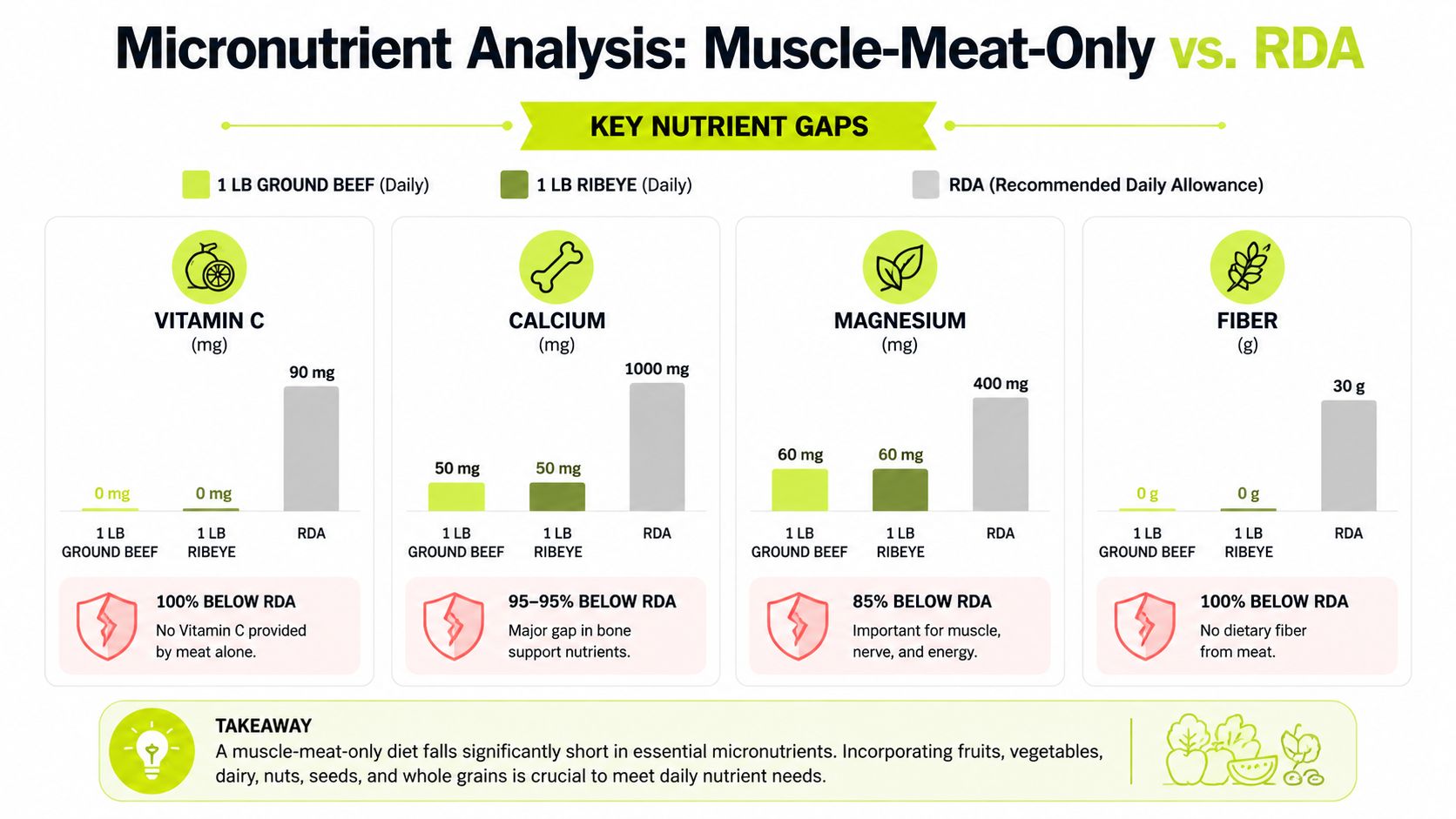
A carnivore diet meal planner should audit micronutrient coverage, not just list steaks. The evidence base remains small. A 2026 scoping review identified only nine English-language human studies published between 2021 and 2025, which means long-term conclusions remain limited. Read the scoping review and its discussion of the evidence base.
Within that limited research, a 2024 nutrient-composition analysis reported that some carnivore patterns met reference thresholds for riboflavin, niacin, phosphorus, zinc, vitamin B6, vitamin B12, selenium, and vitamin A, while exceeding the sodium threshold. A separate analysis identified potential shortfalls in thiamin, magnesium, calcium, vitamin C, and, in some versions, iron, folate, iodine, and potassium. Fiber was described as significantly below recommended levels. The nutrient analysis is indexed by PubMed.
Build coverage into the menu
Muscle meat can form the base of the plan, but a stronger template rotates foods with different nutrient profiles:
| Food category | Planning role | Nutrients to review |
|---|---|---|
| Beef and other red meat | Reliable protein and energy base | Zinc, iron, B vitamins |
| Liver | Small, deliberate organ-meat serving | Vitamin A, folate, copper |
| Fatty fish | Seafood rotation | Vitamin D and omega-3 fats |
| Shellfish | Occasional mineral-dense option | Iodine and other minerals |
| Eggs | Breakfast or quick meal anchor | Choline and other micronutrients |
| Dairy, if tolerated | Fat, protein, and calcium option | Calcium, sodium, lactose |
| Small bones-in fish, where suitable | Calcium-focused seafood choice | Calcium and vitamin D considerations |
The goal isn't to force every food into every week. It's to prevent a menu made entirely from one or two muscle-meat cuts. Liver may fit as a small scheduled serving rather than a daily food. Fatty fish can replace a red-meat lunch. Dairy can help some people, while others find that it worsens digestion or makes appetite harder to manage.
Fiber and vitamin C require particular care because a strict animal-only pattern removes common sources. The provided nutrient analyses identify those as planning concerns, so don't assume that a meat-heavy menu is automatically complete. If you're using carnivore as an elimination approach, document symptoms, review labs with a clinician, and set a reassessment point rather than treating an experimental diet as risk-free.
Building a Repeatable Weekly Template
A strong weekly template uses protein categories before recipes. That distinction matters. “Ground beef lunch” gives you room to make patties, browned mince, or a simple skillet. “One exact recipe every Tuesday” creates unnecessary pressure if a package needs to be used sooner or a family member changes plans.
Start with two or three meal slots, then assign the main cooking method. Put longer preparations on a day when you have time, and reserve fast meals for workdays. A leftover slot is not an admission of poor planning. It's what keeps a household from throwing away food or ordering something outside the plan.
Sample 7-day carnivore weekly template
| Day | Breakfast | Lunch | Dinner |
|---|---|---|---|
| Monday | Eggs and bacon | Ground beef patties | Ribeye with butter |
| Tuesday | Leftover steak | Salmon or sardines | Braised beef shank |
| Wednesday | Eggs with leftover beef | Leftover shank | Pork belly or pork chops |
| Thursday | Ground beef and eggs | Roast beef portions | Fatty fish |
| Friday | Bacon and eggs | Burger patties | Chuck roast |
| Saturday | Leftover roast | Tinned fish and eggs | Family protein base |
| Sunday | Eggs and a preferred meat | Leftover portions | Fresh roast, shank, or brisket |
Batch cooking works best when each item has a job. Brown ground beef into portioned containers, cook a roast for several meals, and keep a fast protein available for the evening when the planned dinner doesn't happen. Pre-portion organ meats before freezing so you can thaw only what the schedule calls for.
Use a leftover buffer midweek and near the weekend. Track what disappears first and what remains untouched. If the family consistently ignores a cut, stop buying it because it looked efficient on paper.
For a reusable recipe foundation, save a carnivore-friendly recipe inside your planning system and assign it to a flexible slot rather than locking the entire week around it. The best template is boring in the right places. It tells you what to thaw, what to cook, and what can wait.
Sample Recipes That Keep Things Interesting
Carnivore cooking gets more enjoyable when you change technique instead of constantly expanding the ingredient list. Searing creates crust, braising develops tenderness, and rendering changes texture. Those three methods can carry a narrow shopping list surprisingly far.
Salt-crusted ribeye with marrow butter
Use one ribeye, salt, and prepared bone marrow butter. Pat the steak dry, salt it, and let it sit while a heavy skillet heats. Sear until a browned crust forms, then cook to your preferred internal temperature using a thermometer rather than relying on time alone.
For the butter, soften butter and fold in roasted marrow. Freeze the mixture in small silicone molds so individual portions are ready for future steaks. This recipe works as a fresh dinner, but the butter is the key meal-prep component.
Slow-braised beef shank
Place beef shanks in a heavy pot with water or an unsweetened animal-based broth and salt. Cover and braise at a low oven temperature until the meat pulls easily from the bone. The cooking time depends on the cut, pot, and oven, so use tenderness as the endpoint.
Cool the shanks in their liquid and refrigerate them. The next day, remove the hardened fat, reheat gently, and serve with the gelatinous broth. This is a useful way to make a tougher cut serve several meals without turning every dinner into another pan-seared steak.
Crispy pork belly bites
Cut pork belly into even pieces, salt them, and cook slowly until the fat renders. Drain, chill, and crisp the pieces in a hot pan or oven when you're ready to eat. Whipped tallow can provide a rich dip or finishing fat, although the pork belly already carries substantial richness.
Rendered tallow stores well when strained and kept in a clean container. That makes it a practical cooking fat for the following week, not another ingredient you need to prepare from scratch.
Recipe libraries such as Mealdill's recipe collection can help you store these techniques alongside your household's regular meals. Keep notes on pan size, preferred doneness, and leftover performance. Those details matter more than collecting dozens of recipes you'll never repeat.
Turning Your Plan Into a Smart Shopping List
Carnivore shopping is narrow, but it's rarely light. You may buy fewer categories than an omnivore household, yet roasts, bulk ground meat, frozen fish, bones, and dairy can quickly fill a cart and a freezer.
Build the list from the finished weekly template. Add every protein, combine duplicates, then separate the results by where you'll find them.
- Butcher counter: Steaks, ground beef, roasts, shanks, pork belly, and organ meats.
- Refrigerated case: Eggs, butter, hard cheese, cream, and other dairy that fits your version.
- Freezer section: Fish, shellfish, batch-cooked portions, and bones.
- Pantry and household shelf: Salt, shelf-stable fish, storage containers, and approved supplements.
Don't guess at quantities while walking through the store. Record the weight attached to each meal slot, then review whether bone-in cuts, trimming, cooking loss, and leftovers will alter the usable amount. A small practical buffer can help, but the correct amount depends on your cuts and household appetite, so avoid treating a fixed percentage as universal.
Shop in an order that reduces friction
Pick up heavy frozen items and roasts toward the end of the trip. If you use a local farm or meat share, compare the available cuts with your template before ordering, then swap categories rather than forcing the original menu.
Keep a separate “check before buying” list for food already in the freezer. Carnivore households often accumulate the same cuts because the shopping pattern is repetitive and easy to forget.
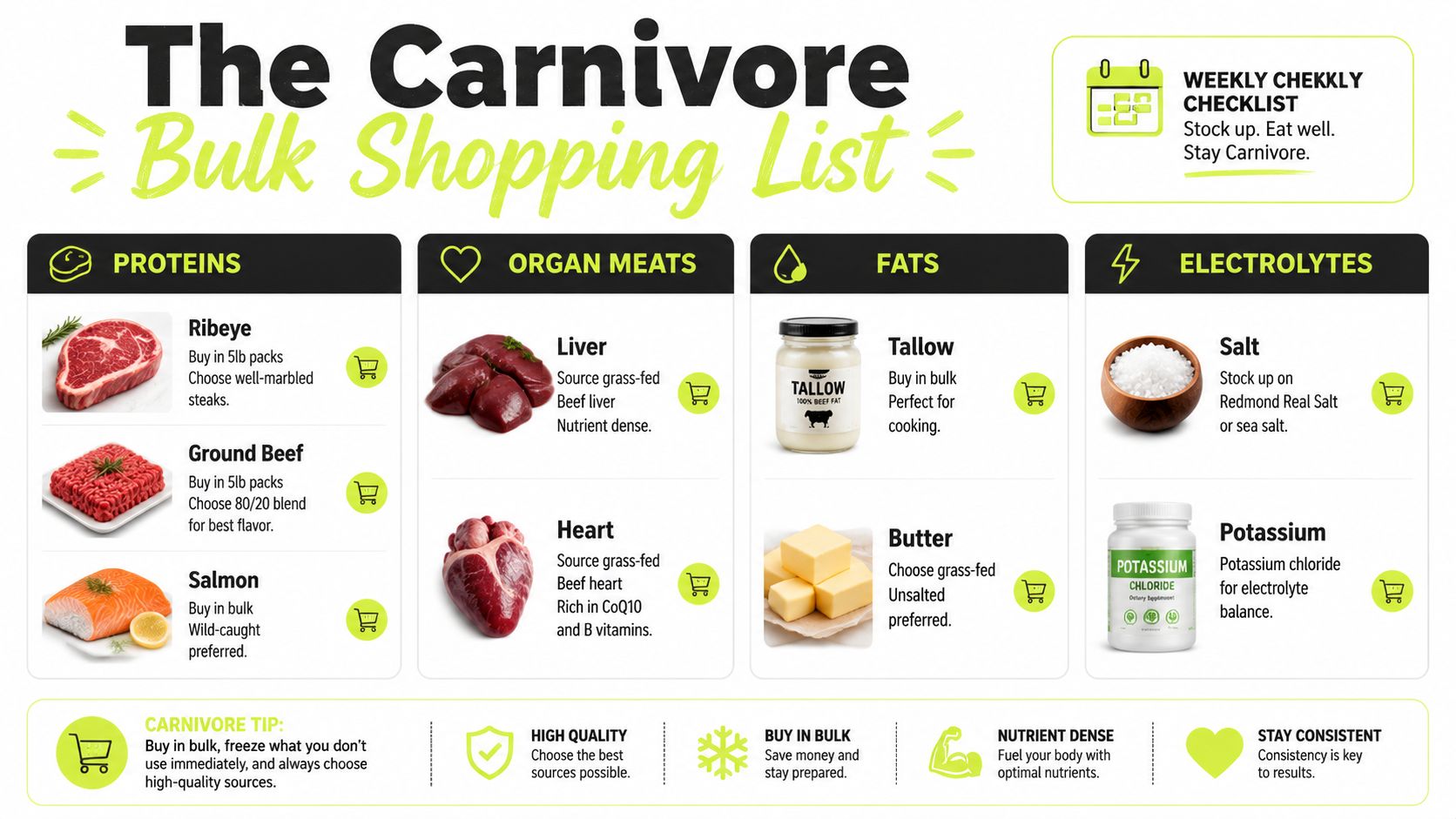
A digital system can aggregate repeated ingredients across meals and present them as one list. For example, a saved bulk beef recipe becomes more useful when its ingredients flow directly into the week's combined quantities instead of being tallied manually.
Choosing Your Carnivore Variant and Family Adjustments
The right variant is the one your household can execute without constant conflict. Strict ruminant-only eating offers the smallest food boundary, while eggs, dairy, poultry, seafood, and organ meats create more room for nutrient planning and family meals. Some people use an animal-based pattern that includes selected plant foods, but that isn't the same as strict carnivore and should be labeled clearly in the planner.
| Variant | Allowed Foods | Grocery Complexity | Micronutrient Coverage | Social Flexibility |
|---|---|---|---|---|
| Strict ruminant-focused | Ruminant meat, animal fats, salt, water | Low variety, heavy quantities | Requires careful review | Lower |
| Relaxed carnivore | Meat, eggs, seafood, selected dairy | Moderate | Broader food coverage | Moderate |
| Nose-to-tail | Muscle meat, organs, marrow, seafood, eggs | Moderate preparation | More deliberate nutrient density | Moderate |
| Animal-based | Animal foods plus selected plant foods | Higher | Broader, but no longer strict carnivore | Higher |
Make one dinner work for several people
Mixed households don't need completely separate meals. Cook a shared protein, season the carnivore portion appropriately, and let other family members add their own sides. Store components separately so sauces, gluten, or seed-oil-based additions don't spread across the entire meal.
Label containers by person when preferences differ. One person may need leaner meat, another may prefer dairy-free meals, and children may have different nutritional requirements from adults. Pediatric diets and high-output athletic diets deserve professional guidance, particularly where carbohydrate or calcium needs may not match an adult elimination plan.
A family plan succeeds when the cook prepares one reliable center, not when every person follows identical rules.
Keep substitutions visible. If the weekly dinner calls for steak but the freezer contains shanks, make the swap in the planner and shopping list immediately. A flexible carnivore meal option is more useful than a rigid recipe that creates another shopping trip.
Automating the Entire Cycle With Mealdill
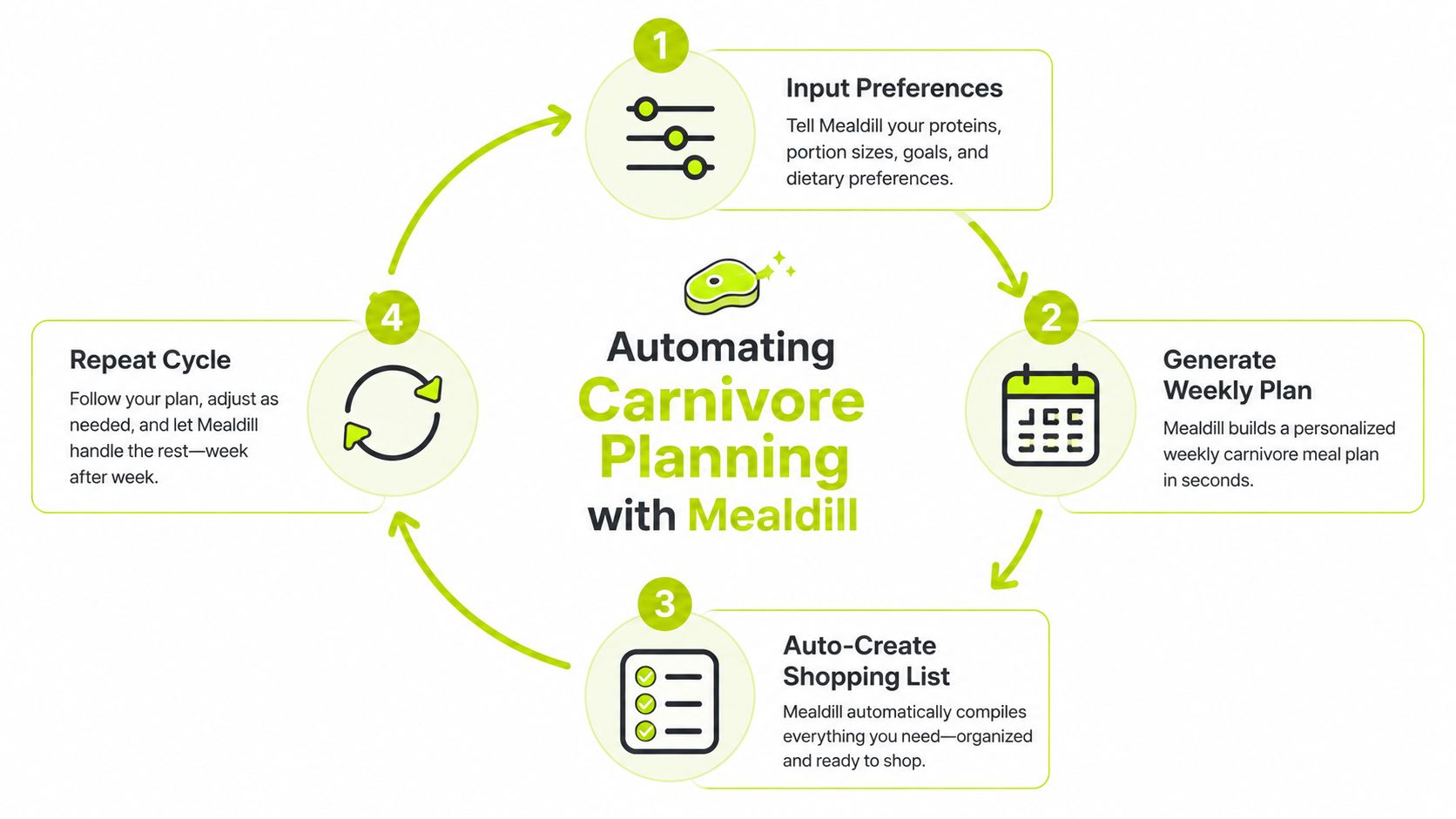
A carnivore week often runs on a narrow ingredient base. Ground beef, eggs, steaks, fish, and slow-cooked cuts return regularly, so the challenge is less recipe discovery than keeping quantities, thawing, cooking, and family preferences aligned.
Mealdill can store recipes, convert them into reusable meal-plan templates, organize shopping lists by aisle, and give household members access to the plan through its meal-planning platform. That removes repetitive administration while leaving decisions about food quality, tolerance, cooking methods, and family fit with the cook.
What automation should handle
- Templates: Save a weekly structure and reuse it while the household schedule remains similar.
- Shopping aggregation: Combine repeated ingredients so the same cut is not entered several times.
- Family visibility: Show the planned dinner and record substitution or preparation notes.
- Nutrient review: Track available macro and micronutrient totals as prompts for further review.
A nutrient dashboard can reveal patterns in the plan, but it cannot replace medical assessment or laboratory testing. If the menu appears low in magnesium, calcium, vitamin C, or another nutrient identified in the research, review food choices and supplementation with a qualified clinician.
Watch the planning workflow here:
Use automation for the repetitive work. Let it remember the structure, total ingredients, and keep everyone informed. Review the finished plan before shopping, especially when nutrient density, leftovers, or different household needs affect the week.
Step-by-Step Setup Inside the Mealdill App
Start with the meals your household already eats. Don't begin by importing a large collection of recipes. A small core of reliable dishes gives the planner enough structure to make shopping and batch cooking useful immediately.
Add your core recipes
Create or import recipes such as ribeye with butter, ground beef patties, braised shank, salmon, eggs with bacon, and a roast. Check every ingredient after importing. Commercial sauces, spice blends, sweeteners, and fillers may not fit your chosen version of carnivore.
Add notes that matter during a busy week:
- Cooking method: Skillet, oven, slow cooker, grill, or pressure cooker.
- Storage: Refrigerator, freezer, or best eaten immediately.
- Scaling: Family size, leftover potential, and portion preferences.
- Substitutions: Shank for chuck, salmon for another fatty fish, or eggs for a missed breakfast.
Assemble the weekly template
Place meals into day slots, then assign batch-cooking sessions. A weekend session can cover roasts, ground meat, eggs, and rendered fat. A midweek session can refresh fish or another quick-cooking protein.
Avoid filling every slot with a different dish. Repeated lunches are a feature because they reduce both preparation and shopping complexity.
Generate and review the shopping list
Create the list after the template is complete. Check consolidated quantities against your freezer, then switch to an aisle-based view if available. Remove ingredients you already own and separate food items from supplements or household supplies.
Share the plan
Invite household members to view dinner assignments and add preparation notes. Shared visibility prevents the familiar “what's for dinner?” interruption and helps another person start thawing or cooking when plans change.
Inspect nutrition and revise
Use the nutrient view to identify patterns, not to create false precision. If your week contains only muscle meat, compare it against the known concerns around vitamin C, calcium, magnesium, thiamin, iodine, potassium, folate, and fiber. Make a food-based adjustment where appropriate, then discuss supplementation or medical concerns with a professional.
The setup becomes valuable when the next week starts from the previous template. Update what changed, replace what the family disliked, and keep the parts that worked.
Handling Transition Challenges and Staying Consistent
Most plans fail at the edges, not at the dinner table. A restaurant may serve a suitable protein but prepare it with an unwanted sauce. Travel may leave you without a kitchen. A partner may support your goals but not want the same food every night.
Use a simple troubleshooting sequence:
- Name the failure point. Was the problem shopping, thawing, cooking, boredom, travel, or social pressure?
- Reduce the decision. Keep a fast meal available, such as eggs, burgers, leftover roast, or shelf-stable fish.
- Change the technique first. Sear, braise, grill, crisp, or shred the same category before buying unfamiliar ingredients.
- Protect the household. Cook a shared protein and let other family members add their preferred sides.
- Review the plan without self-punishment. A missed meal is information about the workflow, not proof that the entire approach is impossible.
At restaurants, ask for plain meat, remove buns and sauces, and choose protein-focused options that fit your variant. For travel, pack suitable shelf-stable foods, research restaurants before leaving, and check whether your accommodation has refrigeration or a kitchenette.
Social pressure needs a short answer, not a debate. Explain that you're testing a structured eating pattern, then bring food you can eat without making the gathering responsible for your choices.
Meal monotony also deserves a planned response. Keep a rotation of cooking methods, schedule a seafood or organ-meat slot when appropriate, and leave one flexible meal for the week's leftovers. Consistency doesn't mean every day looks perfect. It means the system makes the next suitable meal easy to find.
Mealdill helps you save carnivore recipes, reuse weekly meal-plan templates, organize shopping lists by aisle, and keep family members aligned around preparation. Visit Mealdill to build your first repeatable carnivore week and remove the blank-page work from your next grocery run.